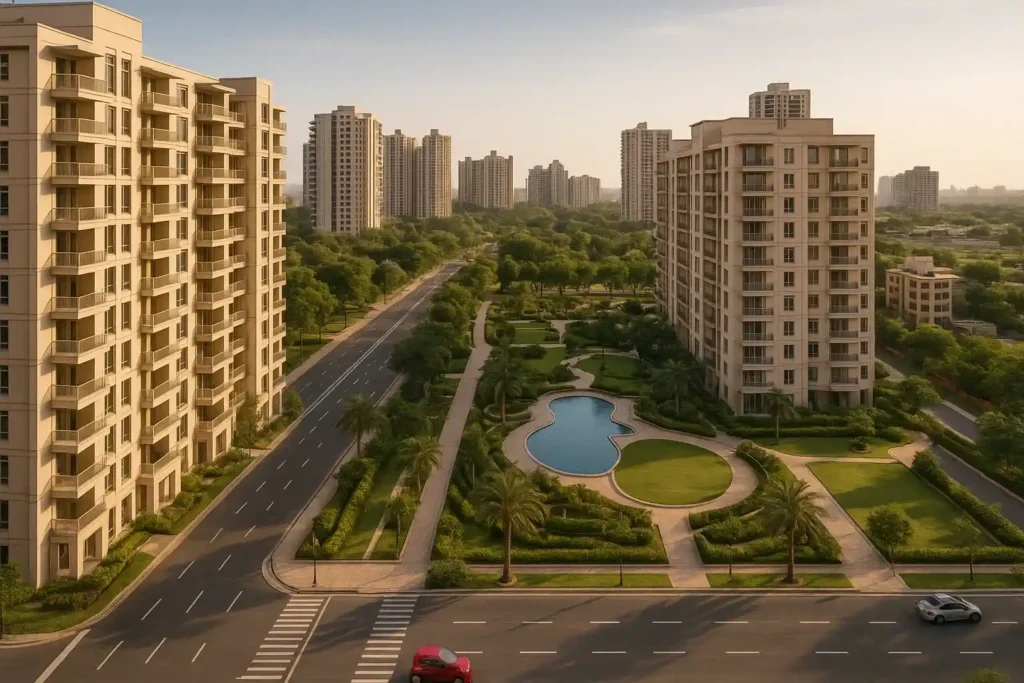
The Gathering Storm of Smarter and Greener Living in 2026 India
That India’s real estate was on its way to change in a memorable way in 2026 was quite clear. Today the average homebuyer is far better informed, respects the environment more and is far more technology aware than ever. This sea change is reshaping India’s residential housing projects: long term efficiency, comfort and responsible development are becoming central requirements instead of optional extras.Sustainably and smartly designed houses in cities are no longer the exclusive domain of the elite. They have extended work into mid priced homes and emerging residential areas, making future ready housing available to a much larger circle of people. This is part of a wider shift in what homes mean to people, seeing them as smart ecosystems designedfor healthier and more efficient ways of living.
What Makes 2026’s Smart and Sustainable Homes?
Sustainable homes focus on reducing environmental impact while improving quality of life. In 2026, residential developments put an emphasis on energy efficiency, water conservation, natural ventilation and eco-friendly building materials. Smart homes support sustainability by using dig-it al technologies which make life a little easier, more secure and do not consume so many valuable resources.
When translated into the features of the housing project, such as automated light-ing, climate adjustment systems, smart security and energy monitoring solutions, these technologies are now common across modern residential building projects inIndia.Unlike in the past, increasing numbers of buyers in the modern world put considerableimportance on long term savings and taking equity seriously. Rising utility costs and awareness of changing climates have fostered in people the view that very little energy is a good thing. As a result, developers are creating residential projects that are sustainable by design, yet offering smart living experiences.
Wealthy city dwellers wanted to live in communities that were both future-ready and affordable. As a result, developments integrating these elements were born. This trend has given residential housing in developing regions such as the emerging regions significant new characteristics: high-quality opportunities outside major metropolitan areas of living and work-style benefits without some of those costs usually associated with first-tier cities.
Demand Increasing for New Homes in Emerging Residential Markets
Emerging residential areas are leading the way in adopting sustainable and smart housing techniques. Buyers are attracted to places like Neemrana, Bhiwadi, and Alwar for their new values-centered and forward looking residence choices. These three cities are now seemingly seeing increasing levels of attention from home seekers who want something fresh and a little bit different.
Flats for sale in Neemrana are receiving attention mainly because of their excellent infrastructure, growing industry, and rational planning. Developers are working in green design and Smart Home infrastructure for concrete needs. They understand that buyers these days require not only seating but contentment.
Living space in Bhiwadi is also modernising. With a short trip to major employment hubs and cities in the National Capital Region, Bhiwadi has a blend of convenience and affordability. Smart infrastructure and forward-looking planning are combining to make new residential communities appeal even more, positioning the town as one of choice for those newly on the housing market in this area.
Residential quarters in Alwar are testing the waters for lifestyle-orientated living. Set in a peaceful environment and now improving transport links, Alwar has seen the rise of buildings with open spaces inside, energy efficient building designs and Smart Community points of service. The type of house sold today is geared towards customers who want long-term assurance of their investment in wellness and sustainability.
Role of Technology in Future Ready Homes
In 2026, technology is becoming more central to the world of residential real estate. The intelligent systems that run in homes help owners directly control lighting, security and managing energy-consuming appliances as well as thermostat settings on their mobile devices — giving them both convenience and saving power at the same time. They also lead to a more responsive, adaptable approach to living.
So, for example, in the residential housing projects of India technology is being used also at community level.This means that residential complex is also equipped with smart access controls, surveillance systems and integrated maintenance solutions. It further enhances the safety and operational efficiency of residential complexes. It is a nice integrated unitTrust is strengthened and standard of living improved overall by this comprehensive approach.
The Advantage of Investment for Long Term
Energy efficient, smart homes are increasingly seen as a long-term investment. A property designed with these features not only retains a better value but also gains more and more constant demand. For both buyers and investors, future regulations and changing life style standards mean that developments in line with those kinds of objectives will be favorable.
Buyer interest in flats for sale in Neemrana and residential project property developed in Bhiwadi shows that these ideas are right now becoming realized. Similarly, the residential housing of Alwar is winning praise for offering stability and long term growth potential by carefully planning a sustainable world.It gave presentations to over 100 asset managers, chief financial officers of Europe’s ten largest banks and chief investment officers at top investment houses across the United Kingdom, Europe and America
Challenges and Opportunities of Adoption
Although the move toward sustainable and intelligent housing offers many advantages, there are also challenges. In particular, the initial costs of development technology integration and Wise purchasing practices are hinder gray matter. However, as demand grows and technologies become easier to use, these hurdles are gradually being overcome.
THD India Trehan Group sees that these blocks must be removed by education and careful planning
A Bright Future For The Indian Property Market
In year 2026, the real estate area is moving towards healthier and more sustainable living. Residential housing projects of India are not now just distinguished by their location or size, but also – and very importantly indeed – through whether or not they can foster efficient, healthy and future ready lifestyles.
Development of infrastructure is continuing in areas such as Neemrana, Bhiwadi, and Alwar. Together with changing home buyer expectations this all means that this area will have a big impact on the future for Indian real estate really.
Conclusion
A new chapter in residential real estate has been opened by sustainable and smart homes. In 2026 buyers have efficiency technology as their top priorities. Integrated housing is forced to do this. The PATH-H team is committed to help move the process ahead by getting in on the ground floor of such developments and better understanding all options.
In emerging markets with increasing concerns for the environment, the future of residential housing in India looks noisy and interesting.
Leave a Reply